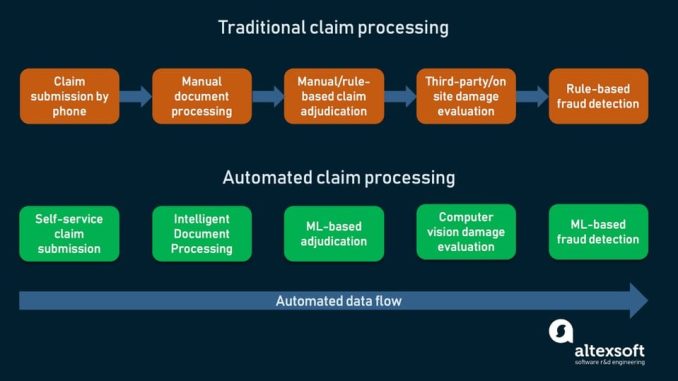
The insurance industry is undergoing a quiet but profound transformation, and at the center of it is the evolution of claims processing. Traditionally, filing a claim has been synonymous with paperwork, phone calls, and long wait times. It’s a process that has often tested the patience of policyholders and strained the resources of insurers. But as technology continues to advance, the future of claims processing is being reshaped by automation—bringing speed, accuracy, and transparency to a function that has long been ripe for innovation. Automated claims processing is not just a technical upgrade; it’s a strategic shift that redefines how insurers deliver value and how customers experience protection.
At its core, automated claims processing leverages artificial intelligence, machine learning, and data analytics to handle claims with minimal human intervention. This means that when a policyholder submits a claim—whether for a damaged vehicle, a stolen item, or a medical expense—the system can instantly validate the information, assess the damage, and determine eligibility based on policy terms. What used to take days or even weeks can now be resolved in hours, sometimes minutes. For example, a driver involved in a minor accident might upload photos of the damage through a mobile app. The system analyzes the images, cross-references them with repair cost databases, and issues a payment—all without a single phone call.
This level of efficiency is a game-changer for both insurers and customers. For insurers, automation reduces administrative overhead, minimizes errors, and frees up human adjusters to focus on complex or high-value claims that require nuanced judgment. It also supports scalability, allowing companies to handle surges in claims volume—such as those following natural disasters—without compromising service quality. For customers, the benefits are equally compelling. Faster resolution means less disruption, quicker access to funds, and a smoother recovery process. It turns what has traditionally been a stressful experience into one that feels responsive and reassuring.
The future of automated claims processing also promises greater personalization. As systems become more sophisticated, they can tailor responses based on individual policyholder profiles, preferences, and history. A long-time customer with a clean claims record might receive expedited approval, while a new customer might be guided through a more detailed verification process. This dynamic approach balances efficiency with risk management, ensuring that automation doesn’t come at the expense of due diligence. It also enhances customer engagement, as policyholders feel recognized and valued rather than treated as just another case number.
Data plays a pivotal role in enabling this transformation. Insurers are increasingly integrating data from diverse sources—telematics, smart home devices, wearable health monitors, and even social media—to build a more comprehensive picture of risk and behavior. This data not only informs underwriting but also supports real-time claims assessment. For instance, a home equipped with smart sensors might automatically alert the insurer to a water leak, triggering a proactive claim before the damage escalates. Similarly, a wearable device could provide health metrics that validate a disability claim, reducing the need for extensive paperwork and medical records. These scenarios illustrate how automation, powered by data, can shift insurance from reactive to proactive.
Despite its promise, automated claims processing is not without challenges. Ensuring accuracy and fairness requires robust algorithms and continuous oversight. Systems must be trained on diverse datasets to avoid bias and ensure equitable outcomes. Privacy and data security are also paramount, as sensitive information flows through digital channels. Insurers must invest in secure infrastructure and transparent policies to build trust and comply with evolving regulations. Moreover, automation should complement—not replace—human expertise. There will always be claims that require empathy, discretion, and negotiation, and preserving that human touch is essential to maintaining customer satisfaction.
Regulatory bodies are beginning to take note of these shifts, exploring frameworks that support innovation while safeguarding consumer rights. As automation becomes more prevalent, standards for transparency, accountability, and dispute resolution will need to evolve. Insurers that embrace these principles early will be better positioned to lead in a landscape where trust is as important as technology. Collaboration between industry stakeholders, regulators, and technology providers will be key to shaping a future that is both efficient and ethical.
Looking ahead, the integration of automation into claims processing will likely deepen. Predictive analytics will anticipate claims before they occur, guiding policyholders toward preventive measures. Blockchain technology may offer secure, tamper-proof records that streamline verification and reduce fraud. Natural language processing could enable conversational interfaces that guide users through claims filing with ease and clarity. These innovations will not only enhance operational efficiency but also redefine the customer experience, making insurance feel less like a transaction and more like a partnership.
Ultimately, the future of automated claims processing is about more than speed—it’s about intelligence, empathy, and empowerment. It’s about using technology to deliver on the promise of insurance: to protect, to support, and to restore. As insurers continue to innovate, those that prioritize transparency, personalization, and human-centered design will stand out. They’ll not only process claims faster—they’ll build relationships that last. In a world where expectations are rising and attention spans are shrinking, that kind of transformation isn’t just desirable—it’s inevitable.