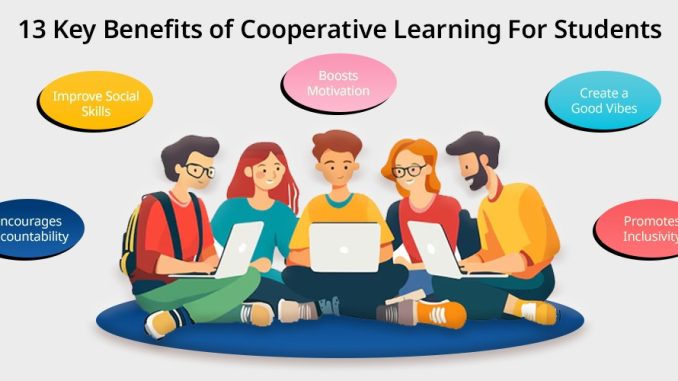
Collaborative learning has emerged as one of the most effective approaches to education and professional development, offering a dynamic alternative to traditional, individual-based instruction. At its core, collaborative learning is about engaging people in shared problem-solving, dialogue, and knowledge construction. It shifts the focus from passive absorption to active participation, encouraging learners to contribute, challenge, and refine ideas together. In business and academic settings alike, this model fosters deeper understanding, stronger interpersonal skills, and a culture of continuous improvement.
One of the most compelling benefits of collaborative learning is its ability to enhance critical thinking. When individuals work together, they are exposed to diverse perspectives and reasoning styles. This interaction compels them to articulate their own ideas more clearly, consider alternative viewpoints, and evaluate evidence more rigorously. For example, a team of analysts tasked with interpreting market data will likely arrive at more nuanced conclusions when they debate assumptions and test hypotheses collectively. The process of explaining, questioning, and defending ideas sharpens analytical skills and leads to more robust outcomes than solitary study often allows.
Collaborative learning also builds communication and interpersonal skills that are essential in today’s interconnected world. In group settings, learners must listen actively, express themselves clearly, and navigate differences constructively. These experiences mirror the demands of modern workplaces, where success often hinges on the ability to collaborate across functions, cultures, and time zones. A product development team, for instance, must coordinate input from designers, engineers, marketers, and end users. The ability to communicate effectively in such diverse groups is not just a soft skill—it’s a strategic asset. Collaborative learning environments provide a safe space to practice and refine these capabilities.
Another advantage lies in the motivational boost that collaboration can provide. Learning in isolation can sometimes feel tedious or overwhelming, especially when the material is complex or abstract. Working with others introduces a sense of shared purpose and accountability. Learners are more likely to stay engaged when they know their contributions matter to the group’s success. This social dynamic can be particularly powerful in professional development programs, where peer support and collective goals drive momentum. A cohort of employees participating in a leadership training initiative may push each other to complete assignments, share insights, and apply lessons in real time, creating a feedback loop that reinforces learning.
Collaborative learning also supports the development of empathy and cultural competence. As learners interact with peers from different backgrounds, they gain insight into varied experiences and worldviews. This exposure helps break down stereotypes, build mutual respect, and foster inclusive thinking. In global business environments, where teams often span continents and cultures, the ability to understand and appreciate diversity is critical. Collaborative learning cultivates this awareness by encouraging learners to engage with difference not as a challenge, but as a resource. A multinational team working on a sustainability initiative, for example, benefits from understanding local contexts and values, which can only be achieved through open, respectful dialogue.
From a pedagogical standpoint, collaborative learning aligns well with constructivist theories, which emphasize the active role of learners in building knowledge. Rather than receiving information passively, learners co-create meaning through interaction and reflection. This approach leads to deeper retention and transfer of knowledge. A business school class that uses case-based group discussions, for instance, allows students to apply theoretical concepts to real-world scenarios, debate strategic choices, and learn from each other’s insights. The learning becomes experiential, contextual, and enduring.
Technology has further expanded the possibilities for collaborative learning. Digital platforms enable learners to connect, share resources, and work together regardless of location. Tools like shared documents, discussion boards, and video conferencing facilitate real-time collaboration and asynchronous engagement. These technologies make it easier to form learning communities that are flexible, inclusive, and scalable. In corporate settings, virtual collaboration allows teams to learn and innovate together without the constraints of geography. A remote team developing a new service offering can brainstorm ideas, prototype solutions, and iterate collectively, leveraging the strengths of each member.
Importantly, collaborative learning also encourages a growth mindset. When learners see that mistakes are part of the process and that feedback is a tool for improvement, they become more resilient and open to challenge. Group work often involves trial and error, negotiation, and revision—all of which reinforce the idea that learning is iterative. This mindset is invaluable in business, where agility and adaptability are key. Teams that embrace collaborative learning are better equipped to respond to change, solve complex problems, and drive innovation.
The benefits of collaborative learning are not limited to immediate outcomes—they extend into long-term development. Learners who engage in meaningful collaboration build networks, develop leadership skills, and cultivate habits of inquiry that serve them throughout their careers. They learn how to contribute to collective goals, how to lead and follow, and how to build consensus. These experiences shape not only what they know, but how they think and act. In a world that values creativity, connection, and continuous learning, collaborative learning is more than a method—it’s a mindset that prepares individuals to thrive in complexity and contribute with purpose.