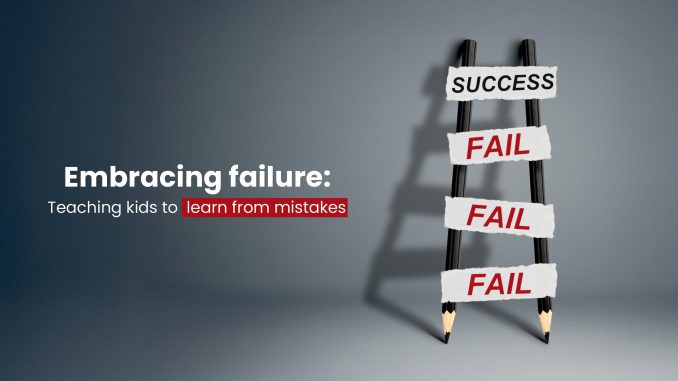
In virtually every facet of life, from the classroom to the boardroom, mistakes are often viewed through a lens of negativity—as failures to be avoided, errors to be corrected, or blemishes on a perfect record. Society often conditions us to fear making mistakes, instilling a reluctance to take risks or deviate from established paths. However, this perspective fundamentally misunderstands the true nature of learning and growth. Far from being roadblocks, mistakes are, in fact, indispensable components of the learning process, rich sources of feedback and powerful catalysts for deeper understanding. The ability to embrace errors, analyze them critically, and extract valuable lessons from them is not merely a desirable trait; it is a fundamental skill that transforms setbacks into springboards for innovation, resilience, and accelerated personal and professional development.
The first crucial step in harnessing mistakes as fuel for learning is to cultivate a **growth mindset**. Pioneered by psychologist Carol Dweck, a growth mindset is the belief that abilities and intelligence can be developed through dedication and hard work, rather than being fixed traits. In contrast, a fixed mindset views intelligence as static, leading individuals to avoid challenges and fear mistakes as indicators of inadequacy. When operating with a growth mindset, a mistake is not a verdict on one’s capability, but rather an opportunity for improvement. For instance, a sales professional who loses a major deal might, with a fixed mindset, blame external factors or conclude they’re simply “not good enough.” With a growth mindset, however, they would view it as a learning experience, asking: “What could I have done differently? Where did my strategy falter? What insights can I gain for the next pitch?” This fundamental shift in perspective is what unlocks the learning potential inherent in every error.
Once a growth mindset is adopted, the next essential step is to engage in **active and objective analysis** of the mistake. This moves beyond simply acknowledging an error to dissecting it with curiosity and a detachment from self-blame. It involves asking a series of probing questions: What exactly happened? What were the contributing factors, both internal and external? What assumptions did I make? What information did I miss or misinterpret? What was the intended outcome versus the actual outcome? For example, if a project manager misses a critical deadline, a superficial analysis might blame a team member. A deeper, more productive analysis would involve reviewing the project plan, communication logs, resource allocation, and individual task progress to identify systemic issues, unrealistic timelines, or unforeseen bottlenecks. This systematic deconstruction allows for the isolation of true root causes, enabling targeted solutions rather than generalized blame.
Following analysis, the key is to **extract specific, actionable lessons**. A mistake provides valuable data, but that data is useless without conversion into concrete takeaways. This means identifying not just what went wrong, but what specific changes can be implemented to prevent recurrence. These lessons should be practical and implementable. If the sales professional realizes they failed to adequately address a client’s specific budget concerns, the actionable lesson is to dedicate more time in future pitches to understanding and proposing flexible financial solutions. If the project manager identifies unrealistic initial timelines, the lesson is to build in more buffer time or involve key stakeholders earlier in the planning phase. These actionable insights form the core of the learning, guiding future behavior and decision-making in a tangible way.
Furthermore, integrating a **feedback loop and iterative improvement** is crucial for truly leveraging mistakes. Learning from errors is not a one-time event; it’s an ongoing cycle. After implementing the actionable lessons, it’s important to monitor the results and be open to the possibility of further refinement. This involves creating opportunities for self-correction and continuous adjustment. For instance, a software developer who introduced a bug into code, learned from it, and implemented new testing protocols, would then monitor the effectiveness of those new protocols, ready to adapt them further if new issues arise. This iterative process fosters a culture of continuous learning and resilience, where improvement is a perpetual journey, and each misstep becomes a stepping stone rather than a stumbling block.
In conclusion, mistakes are not deviations from the path of learning, but rather integral guideposts along the way. By consciously cultivating a growth mindset, engaging in rigorous self-analysis, extracting specific actionable lessons, and committing to iterative improvement, individuals and organizations can transform errors from sources of shame into powerful fuel for growth. This proactive and enlightened approach to failure is what differentiates those who stagnate from those who continually evolve, innovate, and achieve deeper levels of mastery and success in an ever-changing world. Embracing mistakes as invaluable teachers is perhaps the most profound lesson one can learn.