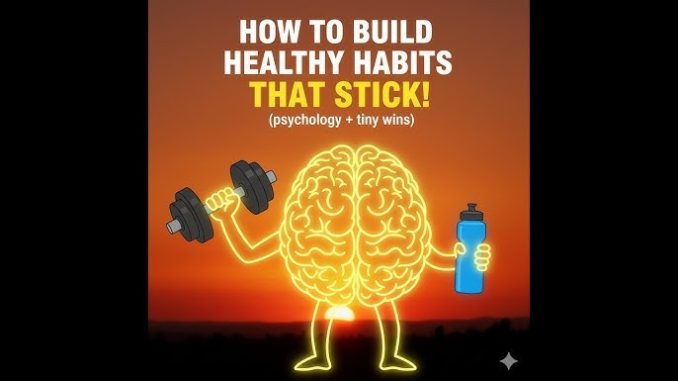
The psychology behind healthy habits is often more complex than the habits themselves. While most people know what they should be doing—eating well, exercising regularly, getting enough sleep—the challenge lies in making those behaviors stick. It’s not a matter of willpower alone, but of understanding how habits are formed, sustained, and integrated into daily life. The key to lasting change is less about intensity and more about consistency, and that consistency is rooted in how our brains respond to cues, rewards, and repetition. When we approach habit formation with psychological insight, we begin to see why some routines flourish while others fade.
At the heart of habit formation is the habit loop: cue, routine, reward. This loop explains how behaviors become automatic. A cue triggers the behavior, the behavior itself becomes the routine, and the reward reinforces it. For example, feeling stressed might cue someone to take a walk, the walk becomes the routine, and the sense of calm afterward serves as the reward. Over time, the brain begins to associate the cue with the reward, making the behavior more likely to repeat. Understanding this loop allows us to design habits that are not only effective but also enjoyable, which is critical for long-term adherence.
One of the most common pitfalls in building healthy habits is starting too big. The excitement of change often leads people to overhaul their routines overnight, but this approach rarely lasts. The brain resists drastic shifts, especially when they disrupt comfort or familiarity. Instead, small, incremental changes are more sustainable. They allow the brain to adapt gradually, reducing resistance and increasing the likelihood of success. For instance, someone trying to adopt a healthier diet might begin by adding one vegetable to each meal rather than eliminating entire food groups. This subtle shift feels manageable and builds momentum.
Identity plays a powerful role in habit formation. When people see themselves as someone who exercises, eats mindfully, or prioritizes sleep, they’re more likely to act in alignment with that identity. This is why affirmations and mindset shifts can be so effective. Rather than focusing on what you’re trying to do, focus on who you’re becoming. The language you use matters. Saying “I’m trying to eat healthy” implies effort and uncertainty, while “I’m someone who makes healthy choices” reinforces a stable identity. This psychological framing helps bridge the gap between intention and action.
Environment also influences habit formation more than we often realize. The spaces we inhabit, the people we interact with, and the cues around us all shape behavior. A cluttered kitchen might discourage cooking, while a visible yoga mat can prompt movement. By designing environments that support desired behaviors, we reduce friction and increase ease. This principle applies in business settings as well. A workplace that encourages breaks, provides healthy snacks, or promotes movement can foster habits that benefit both individual well-being and organizational performance.
Emotional triggers are another factor to consider. Many habits are responses to emotional states—stress, boredom, loneliness. Recognizing these patterns allows us to replace reactive behaviors with intentional ones. If stress leads to mindless snacking, identifying that trigger can help redirect the response to something more constructive, like deep breathing or journaling. This kind of emotional awareness is essential for habit resilience. It ensures that habits are not just mechanical but adaptive, capable of weathering life’s ups and downs.
Accountability and social reinforcement also play a role in making habits stick. Sharing goals with others, joining communities, or simply having a check-in partner can boost commitment. The psychological principle of social proof suggests that we’re influenced by the behaviors of those around us. When healthy habits are normalized within a group, they become easier to adopt. This is why workplace wellness programs, fitness challenges, or even informal support networks can be so effective. They create a culture of health that reinforces individual efforts.
Reward structures are often misunderstood in habit psychology. While external rewards like treats or praise can motivate behavior initially, intrinsic rewards are more powerful for long-term change. Feeling energized after a workout, sleeping better after a tech-free evening, or enjoying clarity after meditation are examples of intrinsic rewards that reinforce the habit loop. The key is to notice and savor these benefits. When the brain associates the behavior with a positive internal state, it becomes more likely to repeat it. This is why reflection and mindfulness are valuable tools in habit formation—they help us connect with the deeper rewards of our actions.
Flexibility is another essential ingredient. Life is unpredictable, and rigid habits often break under pressure. Building habits that can adapt to different contexts ensures they remain intact. For example, if your usual workout routine is disrupted by travel, having a backup plan—like bodyweight exercises in a hotel room—keeps the habit alive. This kind of flexibility requires planning and creativity, but it pays off in resilience. It’s not about perfection; it’s about persistence.
Ultimately, the psychology of healthy habits is about creating systems that support who you want to be. It’s about understanding the cues that drive behavior, the rewards that sustain it, and the environments that shape it. It’s about shifting from effort to ease, from discipline to design. When habits are built with psychological insight, they become less about willpower and more about alignment. They fit into your life naturally, reinforcing your goals and enhancing your well-being. And in a world that often demands more than it gives, that kind of sustainable change is not just smart—it’s essential.