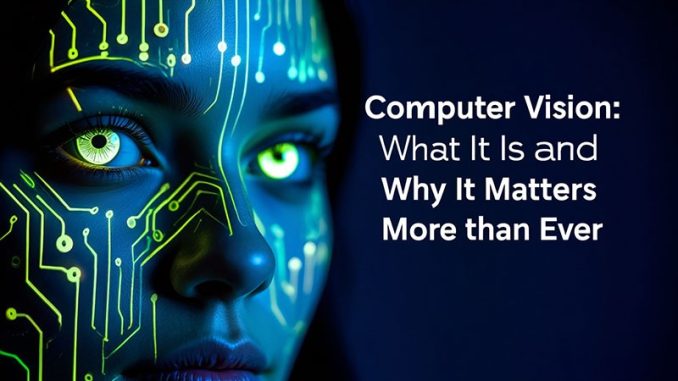
Computer vision is one of the most transformative branches of artificial intelligence, enabling machines to interpret and understand visual information in ways that were once the exclusive domain of humans. At its core, computer vision involves teaching computers to process, analyze, and make decisions based on images and videos. This capability is not just about recognizing objects or faces—it’s about extracting meaning from visual data and applying it to real-world tasks. As businesses become increasingly data-driven, the ability to harness visual information through computer vision is opening up new opportunities across industries, from manufacturing and healthcare to retail and transportation.
The technology behind computer vision relies on complex algorithms and deep learning models that mimic the way humans perceive the world. These models are trained on vast datasets of labeled images, learning to identify patterns, shapes, and features that distinguish one object from another. Over time, the system becomes capable of recognizing not just static images but dynamic scenes, detecting movement, understanding context, and even predicting outcomes. For example, in autonomous vehicles, computer vision is used to identify pedestrians, traffic signs, and road conditions in real time, allowing the vehicle to make split-second decisions that ensure safety and efficiency.
In the business world, computer vision is rapidly becoming a cornerstone of operational intelligence. Retailers use it to analyze foot traffic, monitor inventory, and enhance customer experiences through smart checkout systems. By integrating cameras with AI, stores can track how shoppers move through aisles, which products they engage with, and how long they spend in different sections. This data helps optimize store layouts, tailor promotions, and improve staffing decisions. Similarly, in manufacturing, computer vision systems inspect products for defects with a level of precision and consistency that far exceeds human capabilities. These systems reduce waste, improve quality control, and enable predictive maintenance by identifying signs of equipment wear before failures occur.
Healthcare is another sector where computer vision is making a profound impact. Medical imaging, such as X-rays, MRIs, and CT scans, generates enormous amounts of visual data that must be interpreted accurately and quickly. AI-powered computer vision tools assist radiologists by highlighting anomalies, suggesting diagnoses, and even tracking disease progression over time. In dermatology, for instance, apps can analyze skin lesions and provide preliminary assessments, helping patients seek timely care. These tools don’t replace medical professionals but augment their capabilities, allowing for faster, more accurate, and more scalable care delivery.
Security and surveillance have long relied on visual monitoring, but computer vision takes this to a new level. Instead of passively recording footage, modern systems actively analyze video streams to detect suspicious behavior, recognize faces, and alert authorities in real time. In airports, stadiums, and public spaces, this technology enhances safety while reducing the need for constant human oversight. Businesses also use computer vision for access control, ensuring that only authorized individuals enter secure areas. The combination of facial recognition and behavioral analysis creates a robust layer of protection that adapts to evolving threats.
The rise of computer vision also brings significant implications for data privacy and ethics. As cameras become more ubiquitous and AI more powerful, the potential for misuse grows. Organizations must navigate the fine line between innovation and intrusion, ensuring that visual data is collected, stored, and used responsibly. This includes obtaining consent, anonymizing data where possible, and being transparent about how systems operate. Regulatory frameworks are beginning to catch up, but businesses have a responsibility to lead with integrity, especially when deploying technologies that observe and interpret human behavior.
From a strategic standpoint, computer vision offers a competitive edge to companies that know how to leverage it effectively. It enables automation in areas that were previously manual, reduces error rates, and provides insights that were once inaccessible. For example, agricultural firms use drones equipped with computer vision to monitor crop health, detect pests, and optimize irrigation. Logistics companies track packages and monitor warehouse activity to streamline operations. Even in creative industries, computer vision is being used to tag and organize digital assets, assist in video editing, and generate visual content.
The future of computer vision is likely to be even more integrated and intelligent. As models become more sophisticated, they will not only recognize what is in an image but understand the relationships between elements, infer intent, and interact with other AI systems. This convergence will enable more seamless human-machine collaboration, where visual data becomes a shared language between people and technology. Imagine a construction site where drones scan progress and automatically update project timelines, or a classroom where AI monitors student engagement and adapts teaching methods in real time.
Ultimately, computer vision matters because it bridges the gap between the physical and digital worlds. It allows machines to see, interpret, and act on visual information with increasing accuracy and nuance. For businesses, this means unlocking new efficiencies, enhancing customer experiences, and making smarter decisions. For society, it means safer cities, better healthcare, and more responsive services. As the technology continues to evolve, its potential will only grow, making computer vision not just a tool of convenience but a driver of transformation. Understanding and embracing this shift is essential for any organization looking to thrive in the age of intelligent automation.